

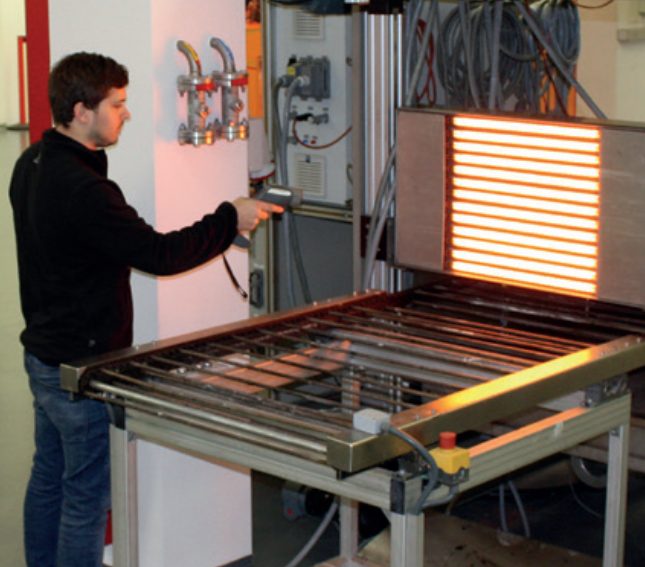
On the lithography floor, the photoresist bake isn’t a warm-up. It is the thermal budget. Let the soft bake or hard bake drift by even a degree or two, and you’ll watch critical dimension tolerances collapse. Add particle generation into the mix, and you can scrap the whole lot. You need an infrared source that delivers repeatable heat—no guesswork. What matters, technically We built the infrared lamp for photoresist around short-wave NIR, fast-response quartz elements that settle within seconds. The system is specced for wafer-level thermal uniformity of ±0.1°C across the bake surface, so every die sees the same profile. Cleanroom Class 1–100 compatibility is baked in, using low-outgassing materials and a geometry that keeps particle shedding down. Zero particle generation isn’t a slogan—we enforce it with controlled materials and a sealed thermal path. The lamp runs 24/7 with zero unplanned downtime, and output holds within tight tolerance over 5,000+ hours. Why it works on the line This lamp hits the photoresist bake window where it counts. It brings the wafer up to temperature fast, then holds it there. The result is tighter process repeatability and less scrap. Tight uniformity cuts down on edge-of-field defects, and the fast thermal response shortens the bake cycle without losing control of the profile. Energy use drops because the lamp heats on demand and cools quickly, and fewer lamp swaps mean fewer maintenance interruptions. Things to know up front Installation means matching the reflector geometry and aperture to your coater/track oven, and tying the lamp into the oven’s temperature interlock. Before you retrofit, confirm voltage and connector compatibility with the OEM interface. Expect a short ramp-up after a cold start while the system thermally stabilizes. Schedule your bake recipes with that in mind, and you’ll stay inside the required process window.