


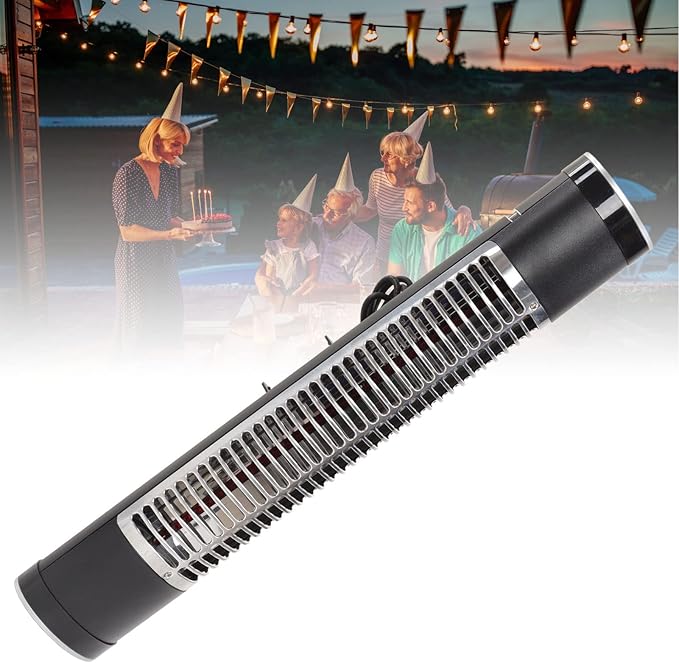
Stop Trying to Heat the Air in Your Factory
If you’ve ever tried to heat a changing room with 6-meter ceilings using a standard heater, you know the struggle. You crank the dial, the heater works overtime, and all that expensive warmth just floats straight to the ceiling. Meanwhile, your crew is standing on the floor, shivering. It’s a total waste of money. That’s why we stop worrying about the air and go straight for the people. We use shortwave infrared (IR) radiators. **Here is the secret:**these units don’t bother warming up the room. They send out electromagnetic waves that hit solid objects—like a worker’s shoulders—and turn into heat instantly. It’s like stepping into sunlight on a crisp autumn day. You don’t wait for the breeze to warm up; you just feel the heat the second it hits your skin.
The Gear and the Setup
For these high ceilings, we use high-wattage emitters tucked into reflective aluminum casings. Those reflectors are a big deal. Without them, you’re just heating the roof trusses. We need that beam pointed straight down. One quick tip: make sure you wire these into a dedicated circuit. They pull a lot of power the moment they kick on. We usually go with quartz-halogen elements because they get hot in seconds. But since they pack such a punch, you have to be careful where you put them. Keep them far away from plastic pipes or anything that could catch fire. And get the height right. Too low, and you’ll bake whoever is standing underneath. Too high, and the warmth just fades away before it reaches the floor.
The Catch (and how we fix it)
Now, these systems are incredibly fast. Faster than anything else we’ve tried. But there is a trade-off: the heat is directional. If a worker steps out of the beam, they’re back in the cold. It’s an instant drop. To stop that from happening, we don’t just place one lamp here and there. We overlap the patterns in the layout. By crisscrossing the beams, we make sure there are no “cold pockets” left in the changing area. Everyone stays warm, no matter where they’re standing.