
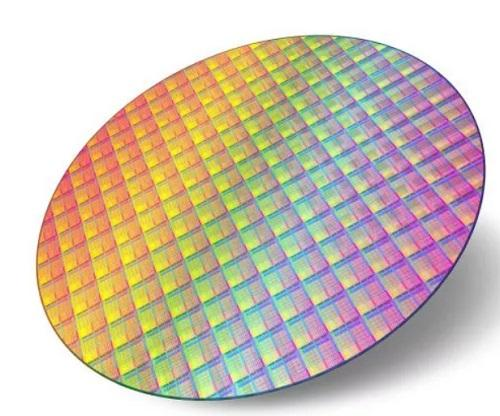
Out on the lithography floor, the PEB step is where you lock in your linewidths. Slide the temperature 0.5°C across the wafer and you’ll print a bias you end up chasing for weeks. We built this Post Exposure Bake heater to pull that variable off the table. What matters under the hood The core is a quartz-halogen short-wave emitter array paired with closed-loop control. Across a 300 mm wafer, thermal uniformity holds within ±0.1°C. Repeatability from lot to lot stays within ±0.2°C, so your photoresist activation profile doesn’t drift. The chamber materials are cleanroom-rated for Class 1–100, and the heater geometry keeps turbulence down so particle generation stays at zero during the bake. You get stable setpoints from 90°C to 150°C, ramp rates up to 10°C/s, and a layout that keeps hot spots off the stage. Here’s the thing: PEB temperature error translates straight into CD error and yield loss. With this heater, your soft bake and hard bake profiles run the way they’re written, not the way the tool decides. The payoff is fewer scrap wafers, tighter distribution on critical layers, and qualification cycles that move faster. You also save energy, because the short-wave source heats the target, not the surroundings. The low thermal mass cuts idle-to-bake transition time. And uptime stays solid—this system is built for 24/7 operation with maintenance you can plan around. What you need to run it The heater works with standard FOUP and SEMI interfaces, but it needs a dedicated 24 V control line and clean dry air to keep the window purge effective. On install, budget 30 minutes for alignment and a thermal drift check. After that, run a daily uniformity verification with a calibrated wafer. If you’re in a high-humidity bay, confirm the purge flow rate. Otherwise, condensation can scatter the infrared path and add a small, repeatable offset.