
Stop Waiting on Your Air Heaters: The Magic of IR and Quartz
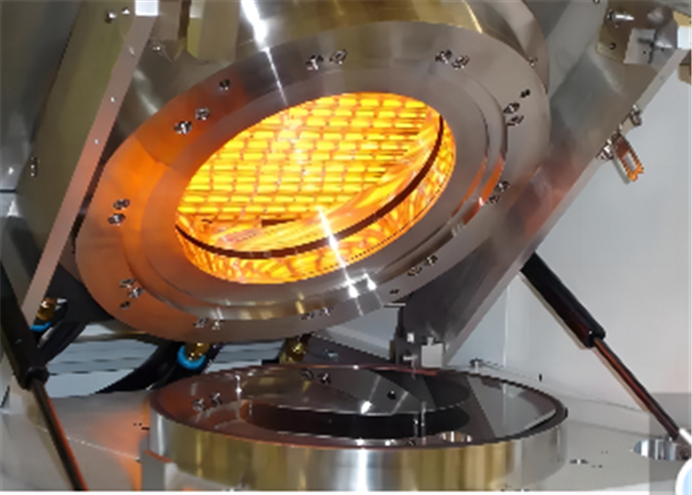
Let’s be honest—waiting for air to heat up a substrate is a drag. In a semiconductor fab, those extra seconds of “dead time” add up fast, eating away at your cycle and slowing everything down. That’s why we use shortwave infrared (IR) lamps paired with high-purity quartz shields. Instead of trying to warm up the air, IR just beams energy straight onto the wafer surface. It’s a total shift in how we handle heat. Why IR beats hot air Think about a convection oven. You have to heat the air, and then the air heats the part. It’s slow, and you’re wasting a ton of energy warming up the entire chamber just to get one piece of silicon up to temp. IR is different. It hits the target instantly. When you make the switch, your ramp-up times don’t just drop—they plummet. We’re talking about moving from minutes down to seconds. It feels like flipping a light switch. The role of the quartz shield Now, you can’t just leave a fab lamp naked. You need a quartz glass shield. Why quartz? Because it can take the heat without melting, and it lets those IR waves pass through without blocking them. But it’s not just about the heat. The shield acts like a bodyguard. It keeps wafer particles from drifting into the lamp. Without it, you’d get hot spots, and your lamps would burn out way too fast. Plus, it softens the blow. Without a properly spec’d shield, the heat can be too intense, which risks shocking the silicon wafer. Nobody wants a cracked wafer. The tricky part IR is incredibly fast, but it’s also very directional. You get a massive concentration of heat exactly where the lamp is pointing. If your part has a weird shape or complex geometry, you’re going to see temperature differences across the surface. This is where the real engineering happens. You have to find the sweet spot between the lamp’s wattage and how far away the quartz shield sits so the wafer doesn’t warp. And one last thing: keep an eye on your cooling. That radiant heat reflects off the shield and heads right back toward the lamp sockets. If your cooling system isn’t up to the task, you’ll end up overheating your own gear.