
Why We Switched to IR Heating for Hydrogen Sensors
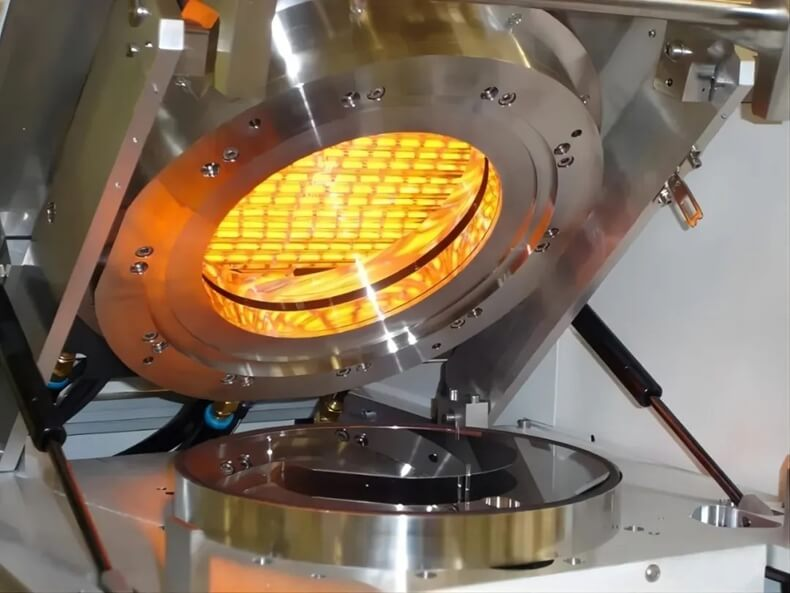
Making hydrogen sensors is a delicate game. You need the thermal profiles to be spot on, or you risk ruining the membrane or messing up the catalyst deposition. For a long time, everyone just used traditional resistive ovens. But honestly? They’re pretty wasteful. We decided to ditch the ovens for shortwave infrared (IR) heating. Instead of heating up a massive volume of air just to warm up a tiny part, we just aim the heat exactly where it needs to go.
Getting the Heat Right
When you’re working in semiconductor fab, waiting for a convection oven to warm up feels like forever. It’s that annoying lag that kills your momentum. We use high-wattage quartz tubes that turn electricity into radiant heat almost instantly. Because the energy hits the sensor substrate directly, the ramp-up time vanishes. Your machines stop idling and actually start processing. Plus, your power bill looks a lot better. You aren’t wasting energy heating the walls of a chamber; you’re only heating the part. It’s just common sense.
Keeping it Green (and Cool)
We’re all trying to hit those carbon-neutral goals, so we looked closely at spectral output. Shortwave IR is the way to go here because it sinks deeper into the materials, and it does it faster. To keep the heat from leaking all over the cleanroom, we use specialized quartz envelopes or gold coatings to bounce that energy right back onto the sensor. One thing to watch out for:**your cooling manifolds have to be up to the task.**These IR arrays put out some intense, localized heat. If your cooling slips, you’re looking at warped sensor housings or burnt-out filaments. Not a fun day at the office.
Fitting it All In
The best part? The footprint is tiny. You can rip out those bulky, space-hogging ovens and swap them for compact IR banks. It makes the whole line feel tighter and more organized. We’ve designed these as drop-in replacements, so you don’t have to shut down your entire operation for weeks just to upgrade. There is a catch, though. Distance is everything. If the lamp is too close, you’ll get hot spots that ruin the sensor. Too far, and you lose all that efficiency we talked about. You’ve got to spend a little time calibrating the focal point to get it stable, but once it’s set, it’s a breeze.