

Why Vacuum IR Curing is the Way to Go for Lead-Free Drying
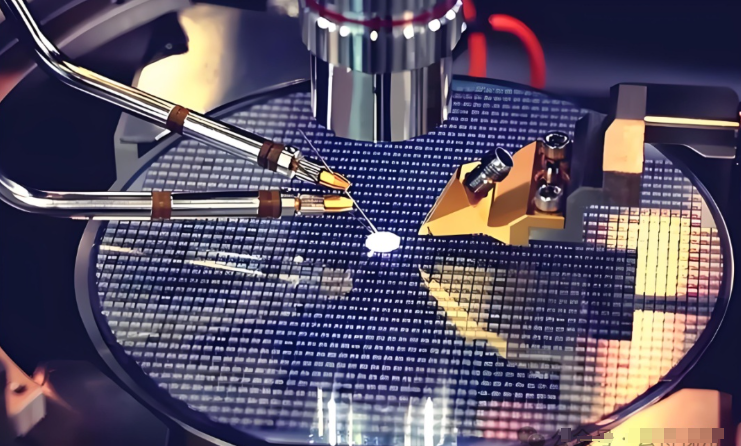
The semiconductor world is pushing hard toward “green” and lead-free standards. But here’s the problem: the old-school convection ovens just can’t keep up. They spend way too much time heating up air, which is slow and, frankly, a waste of electricity. That’s why we shifted to vacuum-compatible infrared (IR) heaters. Instead of relying on air to move the heat, IR uses radiation. The energy goes straight into the wafer or substrate. No middleman. No waiting for the air to warm up.
How the physics actually works
Think about it: in a vacuum, you don’t have air currents to move heat around. It’s a dead zone. We build our heaters to handle high temperatures while keeping that vacuum seal tight. By using short-wave or medium-wave IR emitters, we can hit the exact absorption bands of your photoresist or adhesive. The result? You get your part up to temperature in seconds. Not minutes.**Seconds.**It completely changes how fast you can move.
The nitty-gritty of the hardware
We don’t cut corners on the materials. We use high-purity quartz or special ceramics for the envelopes because “outgassing” is a nightmare. If gases leak into the vacuum, they contaminate the silicon and ruin the whole batch. We also spec the filaments to handle high current densities. That’s the only way to make sure the heat is spread evenly across the entire wafer. But you have to be careful with thermal expansion. When you’re running at max wattage in a vacuum, that heat has nowhere to go—it doesn’t just drift away into the air. It puts a lot of pressure on your cooling plates and vacuum flanges. If your cooling loop isn’t beefy enough to handle the lamp array, your fixtures will warp. And nobody wants that.
Better for the planet (and your wallet)
IR curing is just cleaner. You don’t have combustion by-products or VOCs floating around in a hot breeze. Plus, it’s a simple swap for those old, energy-hogging thermal tunnels. You save a ton of floor space and your power bill drops because you aren’t trying to heat the entire room—you’re just heating the part. It’s efficient, it’s quiet, and it just works.